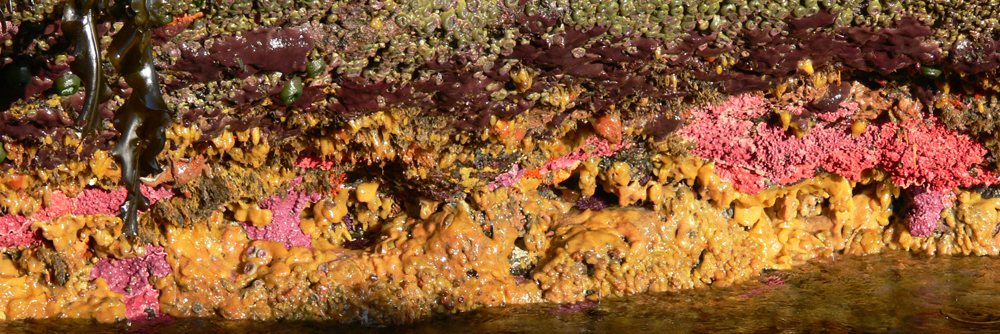

That’s a pen cap, not a cigarette!
I am a member of the University of Chicago’s Department of Ecology and Evolution and Committee on Evolutionary Biology, which I currently Chair. My research focuses on the ecological and evolutionary consequences of interactions among organisms. My work centers on how multi-species systems function and on evaluating methods that might predict how such systems will respond to environmental change, particularly in regard to the current epidemic of species extinctions and introductions occurring throughout the world. I have conducted research on a wide variety of related subjects and retain active research interests in most of them, including the role of ecological factors on the evolution of life history and mating systems, and population viability models of endangered species. I work in several different systems, and study a range of taxa. My general approach develops and tests questions or models of broad theoretical interest, using field experiments, observations of large-scale species introductions, and between-system comparisons. Currently, my research focuses on rocky intertidal marine communities (particularly on Tatoosh Island, Washington) and rivers, which serve as model experimental systems for ecology.
Here is a link with information for people interested in joining my lab.
For a fairly comprehensive bibliography of research done on Tatoosh Island and adjacent coastal shores, as well as some historical photos of the island click here.
My laboratory is strongly integrated with that of my colleague, Dr. Cathy Pfister and I am actively involved as a committee member or co-advisor with most of her students.
We have started studying meso-scale subtidal-intertidal linkages at Tatoosh Island, Washington, particularly following the outbreak of sea urchins that has followed the die off of sun stars (Pycnopodia helianthoides) from sea star wasting disease using underwater and aerial remote operated vehicles (ROV’s) and machine learning on photographs. See underwater VIDEO HIGHLIGHTS.
See a MOVIE CLIP outlining some of our research projects! See the research program through the eyes of undergraduate research assistant Kashiff Miranda in this rap (!) video.
We are also part of a larger community of Marine Scientists affiliated with the University of Chicago.
I was also part of the interdisciplinary Center for Integrating Statistics and the Environmental Sciences (CISES) at the University of Chicago.
I am a member of the University of Chicago’s Microbiome Center.
I am a representative of the University of Chicago to the Organization for Tropical Studies (OTS), and have taken courses, done research and led alumni groups at their field stations.
Research reported on this website and website development has been supported in part by the Andrew W. Mellon Foundation, the National Science Foundation (DEB 9317980, DEB 9701120, DEB 9972739, OCE 0117801, OCE 0452687, OISE 0456110, DEB 0608178, DEB 0919420, DEB 1556874, OCE 1851489), the U. S. EPA (via the Center for Integrating Statistics and the Environmental Sciences), the SeaDoc Society, and the Olympic Natural Resources Center.
 Contact:
1101 E. 57th St, Chicago, IL 60637, USA
773-702-2773
twootton@uchicago.edu